


Not every task needs AI. But the right ones do. 💡
As the use of AI and multi-agent systems grows, so do the demands on those who develop and manage them. Multi-agent systems bring together several specialised AI agents that collaborate to complete tasks. This opens up new opportunities for automation while raising important questions: What data can an agent access? What actions is it authorised to perform? Who reviews and approves the results?
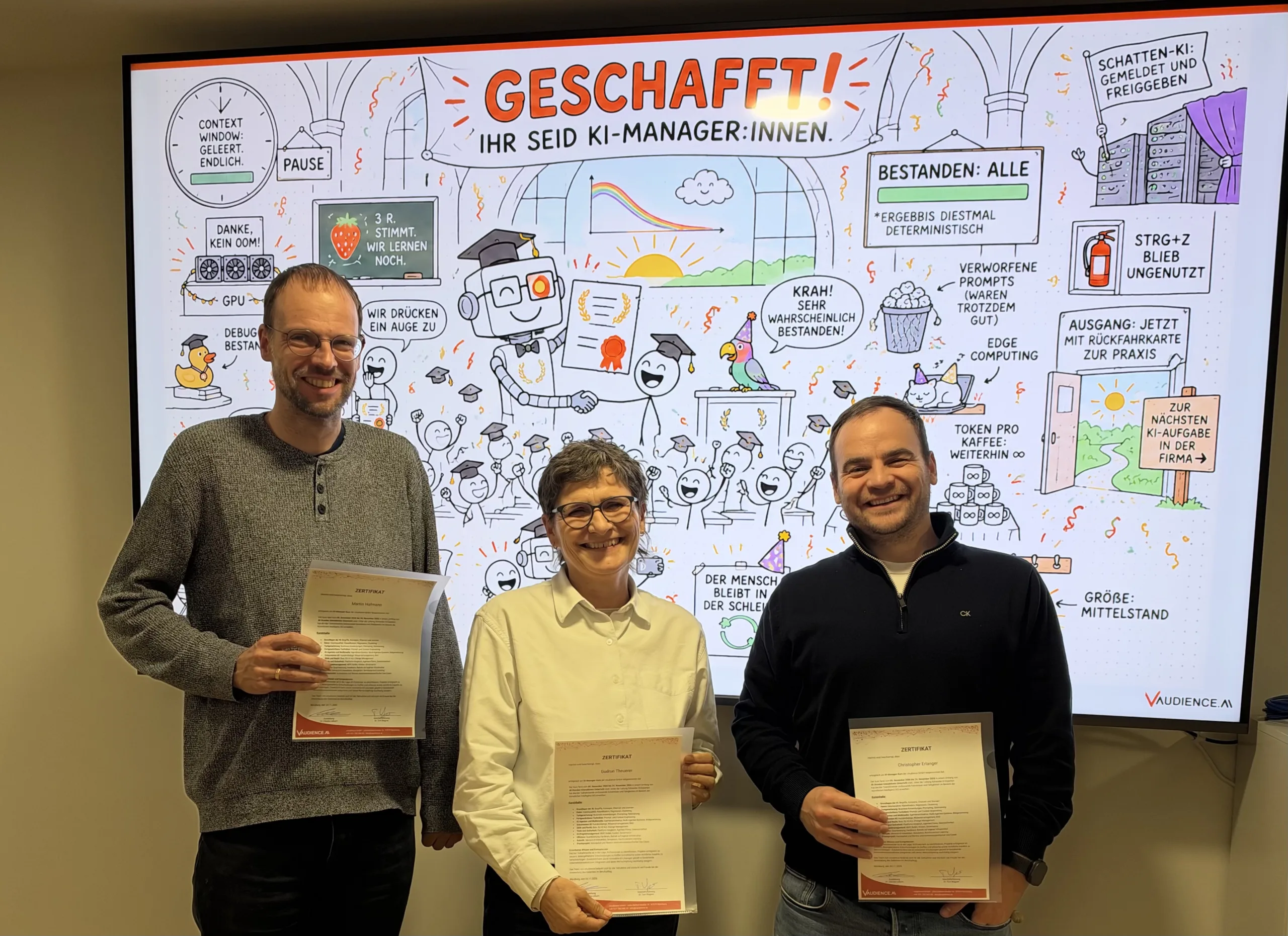
Last week, our Managing Director Gudrun Theuerer and two of our senior executives explored these questions in depth during a multi-day AI Manager training programme at vAudience, building on their existing knowledge and practical experience.
Things become particularly interesting when technological possibilities lead to concrete decisions: Which tasks should we delegate? Where do we need clear boundaries? And how do we ensure that employees can critically assess results rather than blindly trust them?
For us, responsible AI adoption includes data protection, consideration of the applicable requirements of the EU AI Act, and clearly defined responsibilities. This approach to AI governance connects technological capabilities with binding rules for development and use.
AI is an important area of future development for MINOVA, and one in which we are making targeted investments. For our customers and partners in the petroleum industry, what matters is the value it delivers in everyday operations: practical software solutions, transparent and traceable results, and employees who have the expertise to critically evaluate AI-generated outputs. This is how we continue to develop our applications wherever AI delivers tangible benefits.
Our key takeaway: AI-powered processes only make sense when they are genuinely needed – where deterministic solutions fall short and conventional logic alone is not sufficient.